You do not need a mat on day one, though a folded blanket helps the knees. Do one day, then the next. If you miss a day, continue. There is nothing to catch up.
The 7-day path is seven short routines in order. Day one is the smallest. Later days add a shape you have already seen, instead of starting over with a new vocabulary each morning. Each day has its own page with a timer and written cues. You can open day four without finishing day three. The path is a suggestion for a first week, not a course you fail.
You do not need a mat on the first day. A folded blanket under the knees is enough for the floor poses. If you want a tool later, the gear guide says what a block or a strap is for and when you can skip it. The top pick on this page is a card deck for self-guided practice. It is a product link, with the affiliate disclosure above it, and it is not required to do the seven days.
A day that includes a back-friendly shape is still not medical care. If your back hurts, if you are pregnant, or if you are returning after an injury, consult a doctor before you start the week. Skip any pose the safety note tells you to skip. The timer pauses. Leaving a day unfinished is a valid way to use the path.
When the week ends, the other routines are the same kind of practice at five, ten, or twenty minutes: sleep, stress, a kinder back and posture, mornings, and desk breaks. The beginner pose sheet is a one-page PDF of the first shapes if you want paper. The journal explains how to keep a week going without turning it into a streak you have to protect.
What the seven days contain
Each day is a written routine with a timer, built from pose pages you can open. Day 1, Arrive, is 12 minutes on the floor and on your feet. You sit, move through Cat and Cow, fold in Child’s Pose, stand in Mountain, fold forward with the knees bent a lot, and finish in Corpse Pose for most of three minutes. Day 2, On the floor, stays down. It adds Puppy, Sphinx, a small Cobra, Bridge, Happy Baby, and a twist to each side. There is no standing balance. Day 3, Standing up, is where Chair, a short Downward-Facing Dog with bent knees, a low lunge, and both Warrior poses show up. The hamstrings are allowed to stay soft.
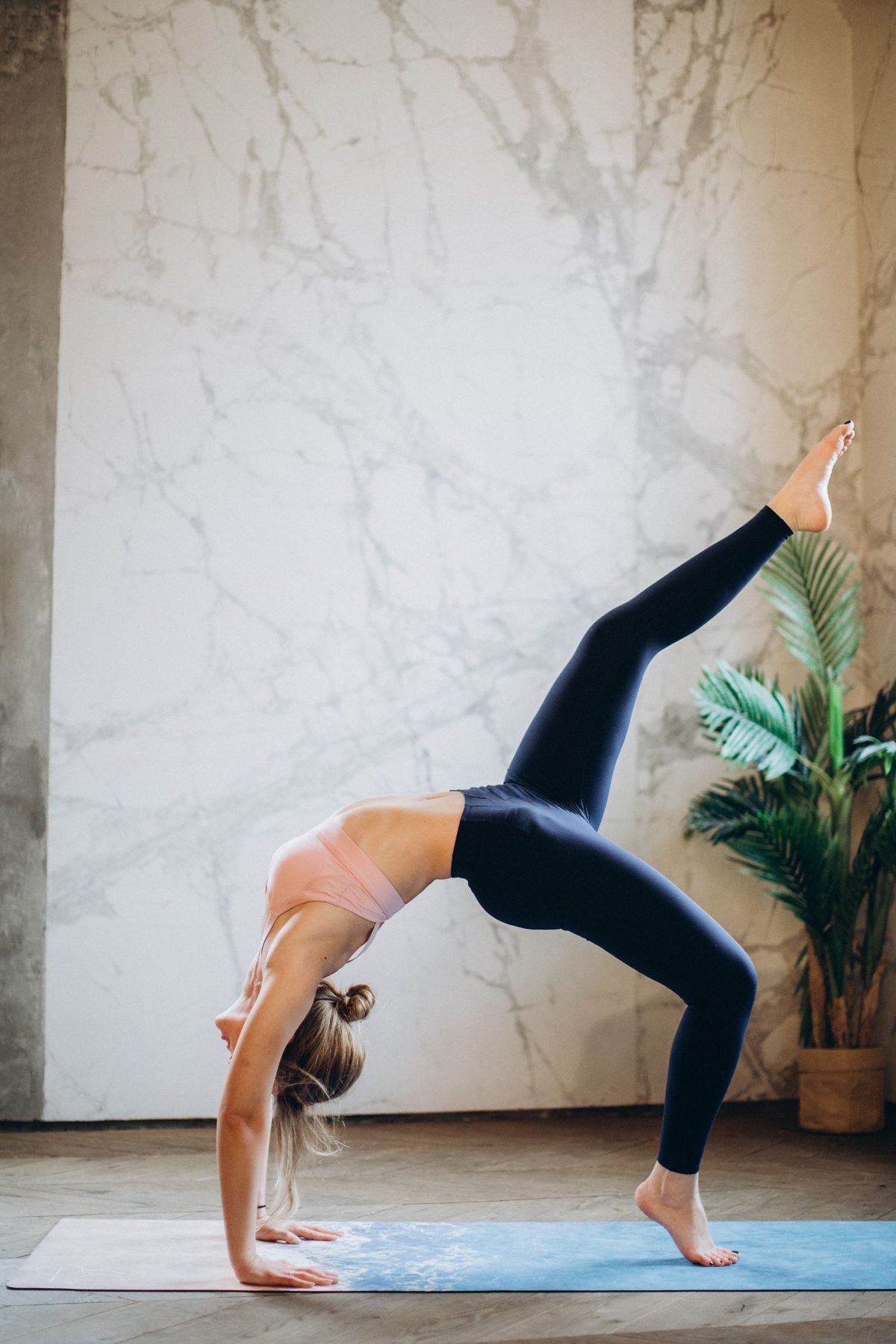
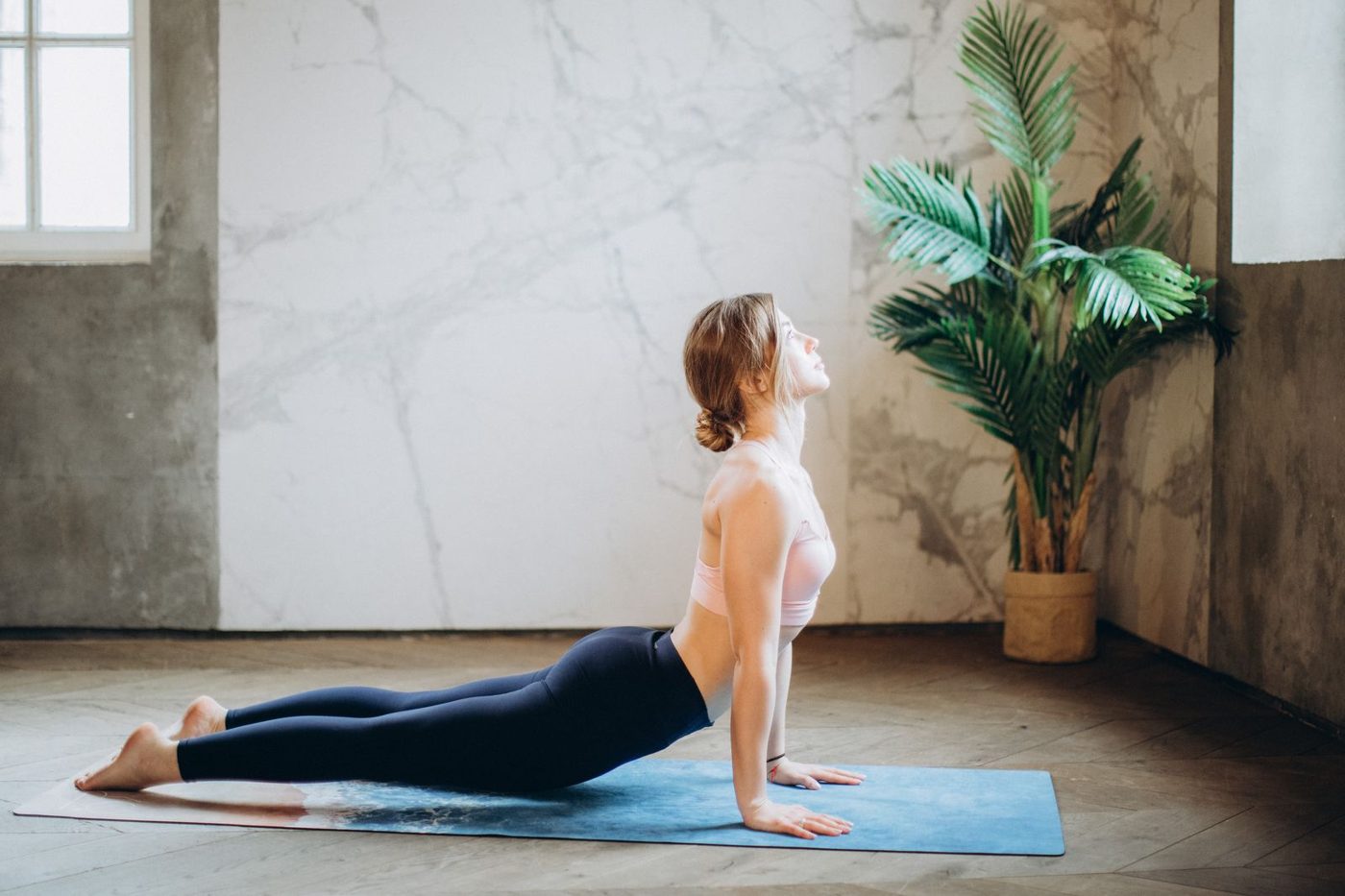
Day 4, Hips and legs, is Bound Angle, the low lunge again, a wide fold, Happy Baby, and a strap stretch on your back. Garland, the squat, is in the list with an explicit skip: if the knees dislike it, stay in the lunge. None of these need to look deep. Day 5, A kinder back, returns to Cat, Cow, Sphinx, a lower Cobra, Puppy, and Bridge, and it tells you to stop if pain is sharp. It is not a treatment. The summary on that day points you at the back-pain article before you treat the sequence as care. Day 6, Steady feet, puts Tree beside a wall, Warrior II, Reverse Warrior, and Triangle with a block. Wobbling is the practice. Legs Up the Wall is included with the same limit as the pose page: skip it if you are pregnant or if a clinician has limited inversions.
Day 7, Put it together, is 15 minutes. It walks a slow sun-salutation shape to both sides, then Tree, Bridge, a twist, and rest. You can open day 4 without finishing day 3. Missing a day is not a debt. After the week, the other routines are the same kind of practice at five, ten, or twenty minutes for sleep, a kinder back, stress, mornings, and desk breaks. A mat is optional on day 1. A folded blanket under the knees is the tool the page actually asks for. The card deck linked above is a separate product with an affiliate disclosure. It is not required to do the seven days.